|
 1) Biology of Rhubarb 1) Biology of Rhubarb
2) Growing Rhubarb
3) Harvesting Rhubarb
4) Dyeing with Rhubarb
5) Rhubarb as a mordant (new page)
Biology of Rhubarb
Rhubarb is a member of the family Polygonaceae, as are Japanese Indigo and Dock, and is indigenous to Asia.
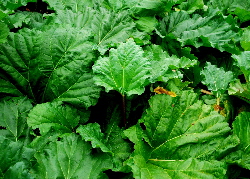
Rhubarb is a perennial plant, with large triangular leaves on a long, thick petiole and small greenish white flowers, which grows from underground rhizomes. The roots of the common edible rhubarb as well as those of ornamental varieties produce lightfast shades of yellow and orange and the roots are an important source of dye in Nepal and Tibet. The leaves of rhubarb can also be used as a mordant.
Cultivation of Rhubarb
Rhubarb is very hardy, being resistant to frost and surviving neglect. In temperate climates, the parts above ground die down after the first frosts and then begin to grow back again from the root during the spring. You can grow rhubarb from a crown or from seeds. Remove any flower stalks that appear promptly; otherwise the plant is likely to die.
Harvesting Rhubarb
Collect the roots when dividing the plants, saving some of the roots for dyes and planting the rest. Wash the harvested roots well and make sure you chop them in small pieces soon after digging them up as dry roots are very hard and difficult to chop. The chopped roots can be used in dyeing either fresh or dried.
Dyeing with Rhubarb
Simmer the chopped roots for half an hour. Strain the liquor and add mordanted fibre to the pot. Leave overnight.
Rhubarb leaves as a Mordant
Top of Page
|