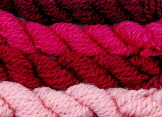
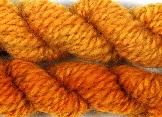
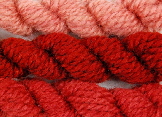
Natural dye extracts are very easy to use for dyeing wool, silk scarves and cotton fabrics. They produce a wide range of exciting colours from subtle pastels to bright and vibrant colours, as well as greys and blacks. You will enjoy using your naturally dyed yarns and fabrics as all those colours go well together.
D. Painting & Printing with natural dye extracts coming soon
E. Gum tragacanth for natural dyes extracts (coming soon)
F. Soy milk for natural dyes extracts (coming soon)
You can also use extracts for painting, stamping and screen printing on fabric.
Extracts save time as they do not require lengthy pre-soaking and simmering. It is easier to repeat a colour using extracts and you can mix extracts to obtain different dye colours.
Dye extracts may look a little pricey at first but they are very economical when you take into account their concentration. If you compare the price of 20 grams of weld extract, for example, with 100 grams of chopped weld stems and leaves, you will see that they are good value.
A. Why use natural dye extracts?
They produce beautiful harmonious colours
Two or more dye extracts can be mixed to obtain different dye colours
Easy to repeat colours if you keep careful records
They save time as they do not require lengthy pre-soaking and simmering
Dye plant extracts have no waste in the form of wet leaves or roots to dispose of at the end
Economical - a small amount of plant extract dyes a large amount of fibre
Very concentrated costing less to transport and using up less storage space
Several of our dye extracts are approved dyestuffs for the Global Organic Textile Standard (GOTS 4.0)
Learn more about dyeing with natural dye extracts: