|
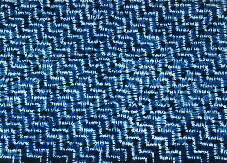 You can use the instructions below to dye beautiful blues with Mayan indigo, Tamil Nadu indigo, woad and natural indigo dyes on a very wide variety of materials. So far I have dyed knitting yarns, fleece for spinning, mother of pearl buttons, feathers, raffia, basket making cane, bone beads, cotton T-shirts, embroidery silk yarns, cotton and linen fabrics (and my fingernails by accident when a pair of rubber gloves developed a hole…). Indigo is also an ideal dye to use for tie dyeing and with shibori techniques. You can use the instructions below to dye beautiful blues with Mayan indigo, Tamil Nadu indigo, woad and natural indigo dyes on a very wide variety of materials. So far I have dyed knitting yarns, fleece for spinning, mother of pearl buttons, feathers, raffia, basket making cane, bone beads, cotton T-shirts, embroidery silk yarns, cotton and linen fabrics (and my fingernails by accident when a pair of rubber gloves developed a hole…). Indigo is also an ideal dye to use for tie dyeing and with shibori techniques.
There are many different recipes for dyeing with indigo some producing dark blues, others light to medium blues. Some recipes work in a few hours whilst others can take weeks to get ready. Some recipes you can’t use with wool and some are smelly whilst others have hardly any smell at all. Some require difficult-to-get ingredients whilst others are very simple.
The indigo vats:
More pages coming soon...
Preparation:
With indigo you don’t need to mordant the fabric beforehand. You do need, however, to scour your fibre very well. After that you need to prepare the indigo paste, follow your chosen recipe, and take care with rinsing. And be sure to follow the appropriate health and safety procedures.
Below you will find a comparison of different indigo vats to help you choose the best recipe for you. If you would like even more information on different recipes try to get hold of Liles’ book on Natural Dyeing.
Comparison of different indigo vat recipes
A. Types of fibres
Cotton: all of the recipes above are suitable for use with cotton.
Silk: you can use most recipes for silk, except the iron vat. However you must make sure you rinse the silk well after you have taken it out of the vat and the silk has turned blue, but before it has dried.
Wool: this fibre is damaged with high alkalinity, therefore the urine vat which is a low alkalinity vat is the most suitable for recipe for wool. The madder vat and the dithionite (hydros) vat are also suitable for wool. Other fermentation vats like the fructose, banana and henna vat can also be used with care when the alkalinity has gone down from pH 11 or pH 12 to at least pH 10. However, it can take a long time, even several days, for the pH to get that low.
B. Dark blues
The zinc-lime vat, the iron vat and the urine vat are the best for building dark blues. They are not as reduced as other vats, and the indigo has more time to attach to the fibres before it is stripped away by the reducing agent.
C. Smell
If smell is a problem, the smelliest of the vats is the urine vat, however you only notice the smell when you open the lid of the bucket. The dithionite (Hydros) vat has some smell (and if spectralite/thiox is used instead of dithionite there will be a strong and unpleasant sulphur smell). Most of the fermentation vats (madder, banana and henna) can have an earthy smell but you only notice that when you open the lid of the container. The fructose, the zinc lime and the iron vats have very little smell.
D. Temperature
If you want to make a large vat, the size of an 80 litre dustbin for example, then the low temperature vats are better. It can be difficult to get a large vat warm enough for the other recipes, so the medium and high temperature vats are easier to make in containers no larger than 10 litres.
The list below will help you choose the best vat for your set up.
-Low temperature vats
The urine vat needs a bit of warmth (30°C) to get started, after that it will continue with temperatures as low as 18°C.
The zinc-lime vat can be started with hot tap water and then it works when the temperature is above 15°C.
The iron vat needs very hot water to get started, after that it will work at low temperatures.
-Medium temperature vats
The madder vat and other similar plant or fruit fermentation vats need a constant temperature between 35°C to 43°C. So you will probably need a heating mat or pad or something similar, and insulation.
-High temperature vats
The dithionite (hydros) vat and the fructose vat need 45°C to 50°C, therefore you will need a hob for those.
E. Economy
The urine vat is the cheapest. The madder vat can be cheap too if you grow your own madder and don’t need to use electricity to keep the vat warm. The same applies to the fermentation vats, if you are using cheap locally available ingredients. Iron is not expensive and quite easy to obtain. Zinc, dithionite and spectralite are more expensive and harder to source.
F. Environment
The fermentation vats (including the urine vat), are the most environmentally friendly, followed by the iron vat. Zinc, dithionite and spectralite are considered hazardous materials.
G. History
-Urine and fermentation vats are the oldest, having been used for centuries with locally available ingredients.
-The Iron vat has been used since about 1750, and the zinc vat since about 1845.
-The dithionite (hydros) and spectralite (thiox) vats are the most recent.
- Gallery of indigo-dyed cotton samples
Top of page
|