|
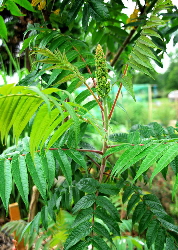 1. Staghorn Sumac 1. Staghorn Sumac
2. Rhubarb as a mordant
3. Juniper as a mordant
1. Staghorn Sumac (Rhus typhina)
The leaves of sumac contain tannin which can be used in the process of mordanting cotton. Sumac is also used in treating leather.
Some people have an allergic reaction to sumac.
Use 40 grams dry leaves and shoots or 80 grams fresh leaves and shoots per 100 grams of cotton.
2. Rhubarb (Rheum spp) as a mordant
Tibetans use the liquor from boiled rhubarb leaves as natural mordant that works best with animal fibres.
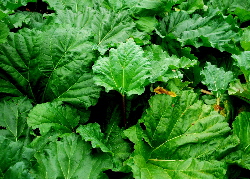
Apparently, a pound of rhubarb leaves can mordant several pounds of fibre. Boil the leaves for an hour to extract the tannin. Make sure you boil the leaves in a well-ventilated area, as the fumes can cause problems, and note that rhubarb leaves contain oxalic acid, which is a poison, and should not be eaten.
Rhubarb roots as a dye
3. Juniper (Juniperus spp) as a mordant
Navajos burn green Juniper needles, gather the ashes and use them as a mordant instead of alum. Ashes and water form a kind of lye, which is alkaline and can cause burns if not used with care.
Be very patient if growing juniper from seeds, my seeds took a whole year to germinate.
Return to:
Mordants introduction, or
Mordanting Cotton, or
Mordanting Silk
Mordanting Wool
Top of Page
|